



Buying your first road bike should feel exciting, not stressful. But once you start comparing entry-level bikes, the choices can get confusing fast. You may see terms like aluminum frame, carbon fork, endurance geometry, disc brakes, rim brakes, wider tires, gear ratios, tire clearance, and drop bars.
For beginner cyclists, the real question is not “What is the most expensive bike I can buy?” It is:
What is the best entry-level road bike for my riding style, budget, and real road conditions?
You do not need electronic shifting, a monocoque carbon frame, or race-level components to start road cycling. But you do need a road bike that fits properly, shifts smoothly, brakes reliably, and feels comfortable enough for longer rides.
This guide explains how to choose a budget road bike without overspending on features you may not need yet.
What Is an Entry-Level Road Bike?
An entry-level road bike is designed for new riders, recreational riders, fitness cyclists, and people who want to start road cycling without paying premium race bike prices.
Most entry-level road bikes are built for paved surfaces, bike paths, city streets, group rides, and training rides. They usually come with drop bars, multiple gears, tires that are narrower than a mountain bike, and a frame designed for efficient pedaling.
Compared with a mountain bike, a road bike is usually faster and more efficient on pavement. Compared with race bikes, an entry-level road bike is usually more practical, more forgiving, and easier for beginner cyclists to ride comfortably.
The best entry level road bike should give you a balance of comfort, control, solid performance, and value.
Start With Your Riding Style
Before comparing components, think about how you will actually use the bike.
Are you planning short fitness rides after work? Weekend endurance rides? City commuting? Long distance rides on paved roads? Occasional group rides? Routes with steep climbs? Smooth bike paths? Rough city streets?
Your riding style should guide your choice.
If you want maximum speed and an aggressive riding position, a race bike may look appealing. But many beginner cyclists are better served by an endurance road bike or an entry-level road bike with endurance geometry.
Endurance geometry usually creates a more upright position, which can reduce pressure on your neck, back, shoulders, and hands. That matters when you are still building fitness, confidence, and handling skills.
A comfortable ride is not a small detail. If your first bike feels too aggressive or uncomfortable, you are less likely to ride consistently.
Frame Material: Aluminum Is a Practical First Choice
Frame material affects price, weight, durability, and ride quality. Road bikes commonly use aluminum, steel, carbon fiber, or titanium. For most budget road bike buyers, aluminum is the most practical starting point.
Aluminum frames are popular because they offer a useful balance of weight, strength, stiffness, and affordability. A stiffer frame can feel responsive when accelerating, while the lower cost helps keep the bike accessible for first-time riders.
Some entry-level road bike models include a carbon fork or full carbon fork to help reduce road vibration. Higher-end expensive bikes may use a monocoque carbon frame to reduce weight and improve ride quality. These features can be useful, but they are not required for your first bike.
For beginner cyclists, a well-designed aluminum frame with reliable components is often a better choice than a low-quality carbon bike with weak parts. Bike fit, braking, smooth shifting, and comfort usually matter more than chasing the lightest frame.
Bike Fit Matters More Than Fancy Specs
A road bike that does not fit well will not feel good, no matter how many high-end features it has.
If the bike is too large, you may feel stretched out over the drop bars. This can lead to discomfort in your shoulders, wrists, neck, and lower back. If the bike is too small, the riding position may feel cramped and unstable.
A proper bike fit helps you pedal efficiently, handle the bike safely, and stay comfortable on longer rides.
If you can visit local bike shops, a test ride can help you understand your preferred size and riding position. If you are buying from direct to consumer brands, carefully check the size chart and recommended rider height before choosing.
When in doubt, think about your riding goals. Recreational riders and commuters often prefer a slightly more relaxed position. Riders focused on speed may prefer a lower, more aggressive setup.
How Many Gears Do You Really Need?
Many beginners ask: how many gears does a road bike need?
The answer depends on where you ride.
If your routes are mostly flat, fewer gears may be enough. If you ride in hilly areas, deal with steep climbs, or plan longer rides, a wider gear range becomes more important.
Gear ratios matter more than the total number of gears. Lower gears help you climb without overworking your legs. Higher gears help you maintain speed on flat roads and descents.
A 16-speed road bike can be a good fit for many beginner cyclists because it gives enough range for city streets, rolling hills, fitness rides, and entry-level road cycling without adding too much complexity.
For a first bike, do not focus only on the biggest number. Look for reliable shifting, smooth shifting, and gear options that match your actual terrain.
Disc Brakes vs Rim Brakes
Brakes are one of the most important parts of any new bike, especially for beginners.
Rim brake bikes are usually lighter, simple, and often easier to service. Rim brakes can work well in dry conditions and are still found on many budget models.
Disc brakes place the braking system near the wheel hub instead of the rim. They can offer more consistent braking in varied conditions, especially compared with basic rim brake setups. This can be helpful on descents, rough pavement, wet roads, and busy city streets.
There are two common types:
-
Mechanical disc brakes: Cable-actuated, practical, and common on budget road bikes.
-
Hydraulic disc brakes: Smoother at the lever and usually more powerful, but often more expensive.
For many beginner cyclists, mechanical disc brakes are a smart middle ground. They provide useful stopping power without pushing the bike into a much higher price range.
Tire Width and Comfort
Do not ignore tires when choosing the best entry-level road bike.
Many people think road bikes must use very skinny tires. While narrow tires can feel fast on smooth pavement, they are not always the most comfortable choice for new riders.
Wider tires can improve comfort, grip, and stability. They can also make the bike feel more forgiving on rough city streets, bike paths, and imperfect pavement.
A 700x28C tire setup is a practical choice for many entry-level road bikes. It keeps the bike efficient on paved surfaces while offering more comfort and control than extremely narrow racing tires.
Tire clearance also matters. More tire clearance gives you more flexibility if you want to use slightly wider tires later. If you plan to ride dirt roads, varied terrain, or rough gravel, a gravel bike with more tire clearance and knobby tires may be a better fit. But if most of your riding is on pavement, an entry-level road bike with practical tire width makes more sense.
Drop Bars Are Not Just for Racing
Drop bars can look intimidating if you are new to road cycling, but they are useful for comfort and control.
Drop bars give you multiple hand positions. You can ride on the tops for a more upright position, use the hoods for everyday riding, or move into the drops when you want a lower position for speed or headwinds.
This matters on endurance rides and long distance rides because changing hand positions can reduce fatigue.
For beginner cyclists, the goal is not to ride aggressively all the time. The right bike should let you use drop bars comfortably without forcing you into a race bike position.
What Features Are Worth Paying For?
When choosing a budget bike, spend money on the features that improve real ride quality.
Worth prioritizing:
-
Correct frame size
-
Reliable frame material
-
Comfortable bike geometry
-
Smooth shifting
-
Practical gear ratios
-
Reliable brakes
-
Tire width that suits your roads
-
Stable handling
-
Reasonable maintenance needs
Features you may not need right away:
-
Electronic shifting
-
Monocoque carbon frame
-
Full carbon fork
-
High-end hydraulic disc brakes
-
Race-level alloy wheels
-
Ultra-lightweight carbon fiber parts
-
Aggressive race geometry
Expensive bikes can be excellent, but they are not always the right choice for a first bike. The best budget road bikes focus on fit, comfort, control, and dependable performance.
A Practical Example: ROCKBROS Spin-W2M Aluminum Road Bike
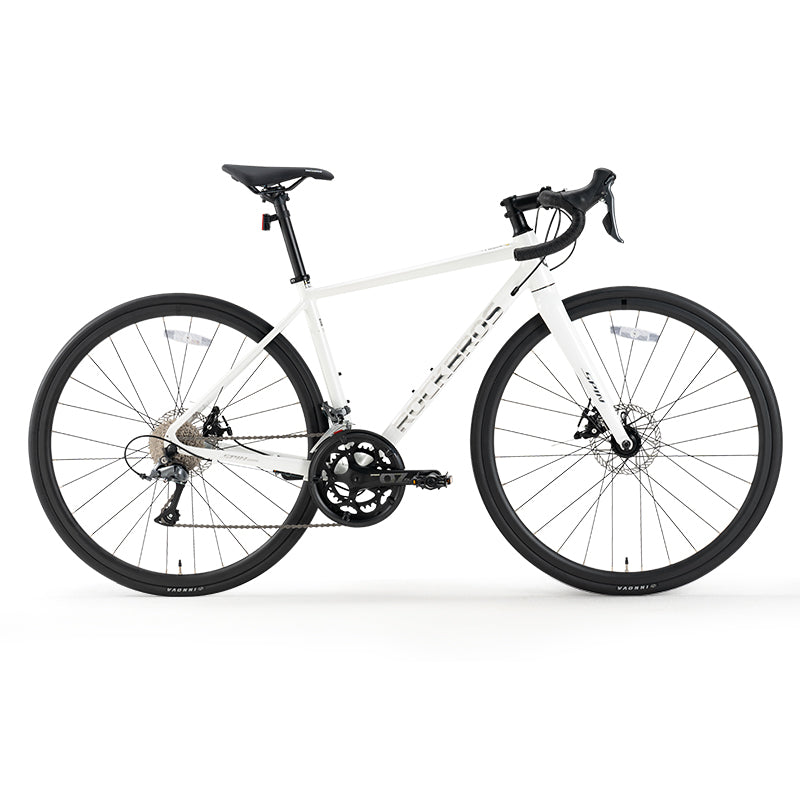
For riders looking for an affordable first road bike, the ROCKBROS Spin-W2M Aluminum Road Bike can be a practical fit.
It uses an aluminum frame, which makes sense for beginner cyclists who want a balance of weight, durability, and value. The Shimano 16-speed drivetrain gives riders enough range for city streets, rolling hills, fitness rides, and first long distance rides.
The cable-actuated mechanical disc brakes provide practical stopping power for new riders, especially when riding through traffic, descending hills, or dealing with changing road conditions. The 700x28C tires with puncture-resistant design also support everyday road cycling by balancing speed, comfort, and stability.
This bike is not positioned as a high-end race bike, and that is part of its appeal. It fits riders who want an entry-level road bike for commuting, fitness, training rides, weekend rides, and building confidence without overspending.
Budget Bike vs Expensive Bike: What Are You Really Paying For?
Expensive bikes often use lighter carbon fiber frames, advanced drivetrains, hydraulic disc brakes, premium wheels, and more aggressive geometry. These upgrades can improve speed and efficiency for experienced riders.
But for a first bike, expensive does not always mean better.
If the bike is uncomfortable, too aggressive, or too complex to maintain, you may not enjoy riding it. A good budget road bike should make it easier to ride consistently. It should feel stable on city streets, efficient on paved surfaces, and comfortable enough for longer rides.
Beginner cyclists should focus on the right bike for current needs, not the most advanced bike on paper.
How Much Maintenance Should Beginners Expect?
Every road bike needs basic maintenance.
You should regularly check tire pressure, clean the drivetrain, inspect brake pads, make sure the wheels are secure, and listen for unusual noises. If the bike uses mechanical disc brakes, you may occasionally need cable tension adjustments. If it uses rim brakes, you will need to check pad wear and alignment.
Entry-level bikes are often easier to maintain than more advanced bikes with electronic shifting or high-end hydraulic systems. That can be a benefit for new riders who want simple, dependable equipment.
Before longer rides, check:
-
Tire pressure
-
Brake function
-
Shifting performance
-
Chain condition
-
Wheel security
-
Saddle height
These basic checks help prevent problems and make your ride safer.
Final Buying Advice
The best entry-level road bike is not the one with the most expensive parts. It is the one that fits your body, matches your riding style, and gives you confidence to ride more often.
For most beginner cyclists, a practical aluminum road bike with smooth shifting, useful gears, reliable brakes, and comfortable tires is enough to start road cycling seriously.
Do not overspend on features you do not need yet. Start with a bike that works for your real routes: city streets, bike paths, paved surfaces, group rides, training rides, and weekend distance.
If you want a beginner road bike for commuting, fitness, and longer rides, the ROCKBROS Spin-W2M Aluminum Road Bike can be a practical option because it focuses on the features new riders actually use: aluminum frame construction, Shimano 16-speed shifting, mechanical disc brakes, internal cable routing, and 700x28C tires with puncture-resistant design.
Choose the right bike, ride consistently, and let your experience guide your future upgrades.
FAQ
What should beginners look for in the best entry-level road bike?
Beginners should look for a road bike that fits properly, feels stable, shifts smoothly, and provides reliable braking. A good entry-level road bike should also have comfortable geometry, practical gear ratios, and tires that balance speed with control.
Is an aluminum road bike good for a first bike?
Yes. An aluminum road bike is a smart first bike for many beginner cyclists. Aluminum frames are usually lightweight, durable, and more affordable than carbon fiber frames, making them practical for commuting, fitness rides, training rides, and weekend road cycling.
Do beginner road bikes need disc brakes?
Disc brakes are not required, but they can be helpful. Mechanical disc brakes offer useful stopping power and control at a reasonable cost. They are especially practical for riders who deal with hills, traffic, wet roads, or changing road conditions.
Are 700x28C tires good for an entry-level road bike?
Yes. 700x28C tires are a good choice for many entry-level road bikes because they balance speed, comfort, and stability. They work well on paved surfaces, bike paths, city streets, and longer recreational rides.
Should I choose a road bike or a gravel bike?
Choose a road bike if most of your riding is on paved roads, city streets, and bike paths. Choose a gravel bike if you often ride dirt roads, rough gravel, varied terrain, or want extra tire clearance for wider or knobby tires.



Leave a comment
This site is protected by hCaptcha and the hCaptcha Privacy Policy and Terms of Service apply.